
Kitchen and bath drainsSinks, disposals, tubs and toilets
Cause dealt withSo the clog doesn’t keep returning
Sewer and septic homesAuburn has both
Auburn’s own list: grease, wipes, litter and hair
Auburn’s sewer utility is blunt about what causes blockages, because it deals with them on a larger scale: about 210 miles of sewer pipe and 17 pump stations. Its guidance to residents is worth repeating, since whatever clogs a City main has to get through your kitchen or bathroom drain on the way.
- Fats, oils and grease. The City says to seal them in a watertight container and put them in the garbage.
- Wipes of any kind, including the ones labeled flushable
- Kitty litter, which the City lists by name
- Hair, which the City says contributes to clogs in pipes and pump stations
- Coffee grounds and starchy scraps that pack into a trap
- Too much at once through a garbage disposal
The first four come straight from the City. The last two are ours.
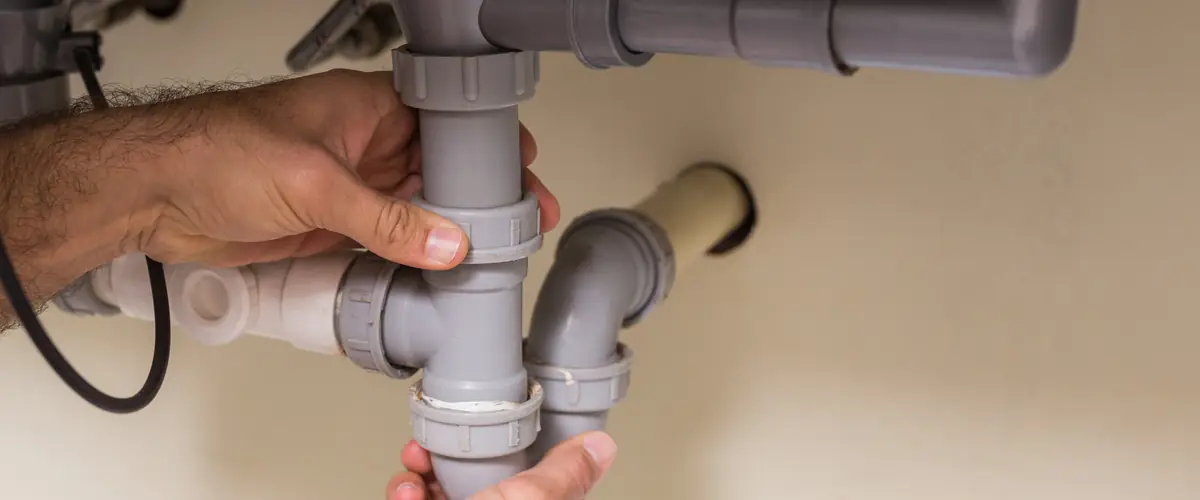
Kitchen clogs and bathroom clogs are different animals
Kitchen sink and disposal
Grease cools and coats the pipe, then food and grounds stick to it. A disposal that hums or backs up into the other bowl usually has a blockage just past it. We open the line and check the trap, the disposal and the pitch of the drain.
Bath sink, tub and toilet
Hair and soap are behind most sink and tub clogs. With toilets it’s wipes, a wad of paper, a dropped toy, or a toilet that has never flushed well. We clear the fixture and say so if the toilet itself is the weak link.
Clearing the clog is half the job. If one drain blocks every few months, something is behind it, and we’ll point out the repair that would stop the cycle when there is one.
Old drains in Auburn’s older houses
Around downtown, where the City’s housing assessment found most lots developed before 1950, and in South Auburn’s 1950s and 1960s neighborhoods, drain piping can be as old as the house. Older metal drain lines roughen and narrow on the inside as they age, so they catch grease and hair that a smooth new pipe would pass. A sink in one of these homes that has always been slow may have a pipe problem, not a habit problem.
In a newer home on Lea Hill or in Lakeland, a repeat clog is more likely to be something specific: an object in the line, a section that has sagged, or a fixture issue.
Most of Auburn is on sewer. A few corners are on septic.
The City collects wastewater from most Auburn addresses and sends it to King County’s South Treatment Plant in Renton. There are exceptions. The City’s sewer plan describes a sizable area in north Lea Hill where single-family homes on quarter-acre to one-acre lots still use septic systems, and another unsewered, low-density area east of Kersey Way.
That changes the advice. On a septic system, grease, wipes and harsh chemical drain openers do damage twice, in the pipe and in the tank. And when a septic home starts draining slowly at every fixture, the cause may be the tank and not a clog, which we’ll tell you honestly.
When it isn’t just the sink
- One slow fixture is almost always a local clog in the trap or branch line.
- Two fixtures in one bathroom backing up together point to the branch they share.
- Toilets gurgling when the washer drains, or water rising in the lowest tub or shower, means trouble in the main drain. That is a drain cleaning job.
- Backups that return on a schedule deserve a look inside the pipe with a sewer camera inspection.
You get the price for a clog repair before we begin. It’s set by the job, not by the hour.
Kitchen & Bathroom Clogs FAQs
Where does Auburn want me to put cooking grease?
In the garbage. The City of Auburn’s sewer utility says fats, oils and grease should go into a watertight container and then into your solid waste container, not into a sink, toilet or any other drain. Grease hardens inside pipes, yours before the City’s.
What does Auburn’s sewer utility say about wipes labeled flushable?
That they shouldn’t be flushed. The City’s utility guide says wipes can contribute to clogs in sewer pipes and pump stations even when the package calls them flushable. Inside a house, they tend to snag in the toilet’s trapway or at the nearest bend in the drain.
My Lea Hill home is on septic. Does that change how you handle a clog?
It changes what we watch for. Parts of north Lea Hill and the area east of Kersey Way are not on City sewer. We clear the clogged fixture the same way, but we pay attention to whether the whole house is draining slowly, since that can point to the tank and not to a pipe.
Why does my toilet keep clogging?
Repeat clogs usually come down to one of three things: what goes into the toilet, a partial blockage further down the line, or a toilet that doesn’t flush with enough force. We clear it, check the line, and tell you if replacing the toilet makes more sense than fighting it.
How does Artisan charge for clearing a clog?
By the job, not by the hour. You get the price before any work begins.