
Gas and electricTank heaters repaired and replaced
Strapped for earthquakesValley soil makes it matter
Upfront pricingPriced by the job, not the hour
Cold shower in Auburn? Start with these clues
What the heater is doing tells us a lot before we open it up.
Electric heaters
Lukewarm water, or hot water that runs out quickly, often means one of the two heating elements or a thermostat has quit. No hot water at all can be a tripped high-limit reset.
Gas heaters
A pilot that won’t stay lit or a burner that won’t fire points to the thermocouple or the gas control. If you ever smell gas itself, leave the house and call your gas utility before anyone else.
- Water on the floor around the tank
- Popping or rumbling while the tank heats
- Rust-colored hot water when the cold runs clear
- Dripping at the relief valve or its discharge pipe
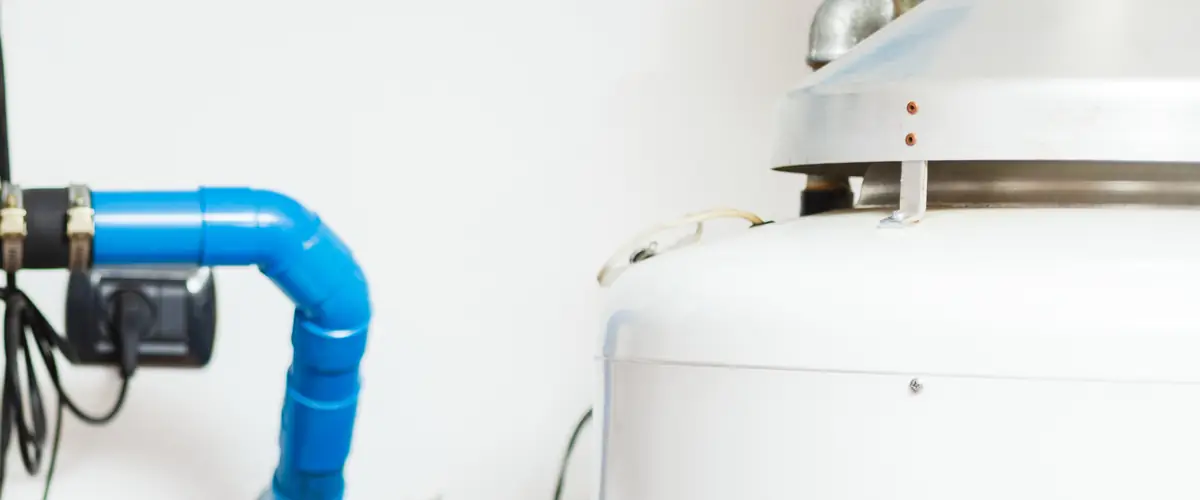
What Auburn’s water does to a tank
Auburn’s water doesn’t come from a mountain reservoir. The City pumps it from six active wells, 290 to 750 feet deep, and collects it from two springs near the valley walls, Coal Creek Springs and West Hill Springs. In its annual water quality report the City calls that water soft to moderately hard, and it lists naturally occurring iron and manganese among the things it monitors.
For a water heater, that adds up to slow, steady sediment. Minerals drop out as the water is heated and collect on the floor of a gas tank or on electric elements, which is what causes the popping noise and the gradual loss of hot water. A partial flush each year helps, and so does checking the anode rod on a tank that’s past the midpoint of its life. It isn’t a harsh water supply, but no tank here is maintenance-free.
Pressure plays a part too. Auburn’s system is split into pressure zones, and a home that has a pressure-reducing valve or a backflow assembly on its line is closed off from the main: when water heats and expands, it has nowhere to go. Absorbing that is the job of a thermal expansion tank, and we check for one on every replacement. If the pressure-reducing valve itself has failed, that’s a plumbing repair we handle too.
Gas or electric in Auburn
Puget Sound Energy supplies natural gas across Auburn. The one wrinkle is on the southeast side: the City’s utilities plan notes that homes around Auburn Adventist Academy get their gas from Enumclaw’s gas utility instead. Either way, a home with gas service can run a gas tank heater, which reheats a full tank more quickly than a typical electric unit.
All-electric homes aren’t at a disadvantage. An electric tank of the right size is a reliable, low-fuss choice, and we’ll match the capacity to the number of people in the house and the way they use hot water.
Want hot water that doesn’t run out? As a Rinnai-trained dealer, Artisan also installs tankless units. The details are on our tankless water heaters page.
Repair or replace: how we call it
Usually a repair
A burned-out element, a bad thermostat, a worn thermocouple or gas control, or a relief valve that no longer seals, on a tank that is otherwise sound and not near the end of its life.
Usually a replacement
Water seeping from the tank body, a heater that has needed one repair after another, or one that can’t keep up with the household anymore. The typical life of a tank heater is somewhere around 8 to 12 years.
You’ll have the price for either option before we start. Artisan prices by the job, not by the hour.

How a new heater goes in, Auburn edition
- Earthquake straps. State code calls for water heaters to be strapped in place, and it matters in Auburn: the City’s hazard guide points out that the Green River Valley’s alluvial soil is prone to liquefaction in a quake.
- Thermal expansion control wherever the plumbing is closed off from the main
- On gas heaters, the vent and the gas connection inspected
- Relief valve and drain line piped correctly
- Permits. Plumbing permits here are issued by the City of Auburn’s Permit Center, and we’ll tell you what your installation needs when we quote it.
Water Heaters FAQs
Who issues water heater permits in Auburn?
The City of Auburn does, through its Permit Center on MyBuildingPermit.com. As a rule, replacing a water heater calls for a plumbing permit and an inspection. The City’s plumbing permit checklist also says that when equipment has to be replaced in an emergency, the application is due by the next working business day. We’ll tell you what your job needs when we quote it.
Does Auburn’s well and spring water shorten a water heater’s life?
Not dramatically. The City describes its water as soft to moderately hard. That still leaves mineral sediment behind in a tank as the years go by, which is why a periodic flush and an anode check are worth doing.
Can I get a gas water heater anywhere in Auburn?
Natural gas in Auburn is a Puget Sound Energy service, except for a pocket near Auburn Adventist Academy that is served by Enumclaw’s gas utility. Whether your street and your house have a gas line is a question for the utility. If you have gas, we can install a gas tank heater. If you don’t, we’ll size an electric one.
Does my Auburn home need an expansion tank?
That comes down to what sits between the meter and the heater. A pressure-reducing valve or a backflow assembly closes the plumbing off from the City main, and expanding hot water then needs somewhere to go. We look for both on every replacement and fit an expansion tank when one is called for.
Why do earthquake straps matter so much for a water heater in Auburn?
A full tank is heavy, and one that tips can break its water and gas connections. The City of Auburn’s hazard guide notes that the alluvial soil of the Green River Valley is prone to liquefaction in an earthquake, which is the kind of ground movement straps are there for. State code calls for water heaters to be strapped, and every heater we install is.