
Tailpiece to houseThe owner’s side of the water line
City notices explainedWhat a continuous-use door hanger means
Upfront pricingPriced by the job, not the hour
The tailpiece: where Auburn’s responsibility stops
In Auburn the dividing line is specific. The City maintains the water main, the service line from the main to the meter, the meter itself and a short stub just past it called the tailpiece, which the City says runs 12 to 36 inches and sits at or near the property line. Everything after the end of that tailpiece is the property owner’s: the buried service line to the house, any pressure-reducing valve or backflow assembly on it, the plumbing indoors and the irrigation system.
So a leak toward the street from the meter is the City’s to fix. A leak on the house side is the work we do: repairing or replacing the line that runs from the tailpiece to your home.
Auburn’s meters often spot a leak before you do
The City finished installing radio-read meters for all customers in 2017 and 2018, and it uses them to watch for water that never stops running. If a meter shows continuous flow for more than 48 hours, maintenance staff check the City’s side. If that’s dry, you get a door hanger.
The City’s own test is the right next step:
- Close everything: faucets, hoses and irrigation.
- Rule out the toilets with a dye tablet or food coloring in the tank.
- Shut the main valve at the house. A meter that goes still means the leak is past that valve, somewhere indoors. A meter that keeps counting means water is getting out of the buried line.
That last result is a service line leak, and it’s worth acting on quickly. Auburn bills water on a tiered rate, so the cost per gallon climbs as a leak pushes your usage up. Customers can also sign up for the City’s water usage portal and set an alert for unusual use, and the City has a leak adjustment request form to fill out once a leak has been repaired, so hang on to the invoice.
Valley floor or hillside: reading your yard
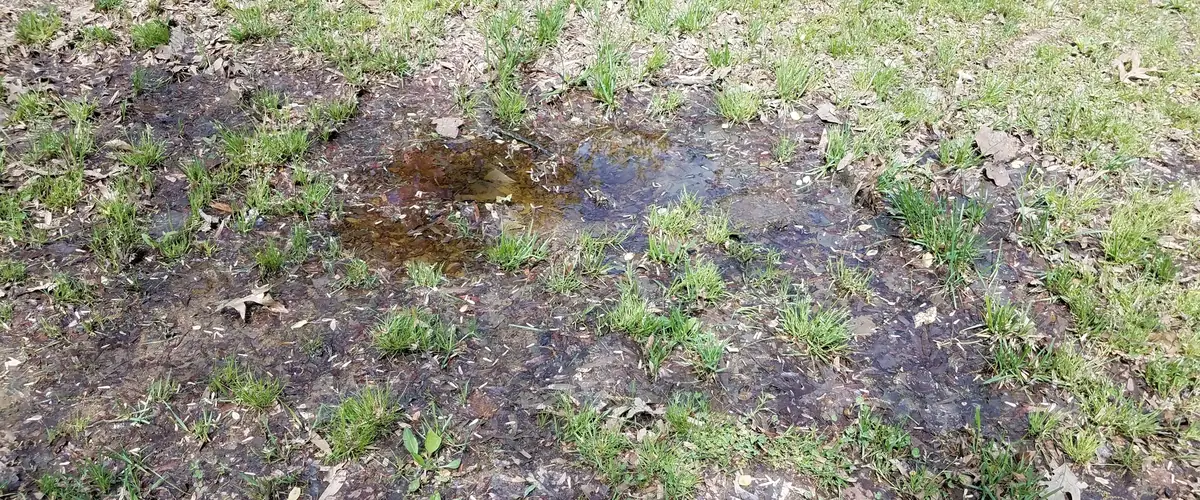
Most of Auburn sits on a flat plain between Mill Creek and the Green River, and the City’s storm drainage plan rates most valley-floor soil as very slow to soak up water. After a wet week, a soggy lawn there proves nothing. On West Hill, Lea Hill and Lakeland Hills the ground climbs to 400 or 500 feet and yards slope, so leaking water can surface well downhill from the break. In both settings the meter test is more reliable than the lawn. Other signs worth a call:
- Weaker flow all through the house, not at one tap
- A hiss or the sound of running water at the main shut-off with everything closed
- One strip of lawn that stays green or soft through a dry spell
- Sand, grit or discolored water at several taps
- Standing water in the meter box or seeping along the foundation
- A usage alert or a higher bill you can’t explain
One repair, or a whole new line?
Repair
One break, a failed coupling, or damage from a shovel or a root, in pipe that is otherwise in sound shape.
Replace
Pipe that is on its second or third leak, is corroded along its length, or is a type known for failing. A new line also brings pressure back to where it should be.
In the older parts of town, the pipe in the ground can be as old as the house. Most lots near downtown were developed before 1950, and the City itself is working through an inventory of service line materials: it reports no known City-owned lead service lines and asks homeowners to share what they know about their own. If we open a trench and find old galvanized steel or anything questionable, we’ll show you and price both paths, upfront and by the job, not by the hour.

How a water line job runs in Auburn
- Buried utilities marked before the first shovel goes in
- Your meter reading and the symptoms compared, so we know the service line really is the problem
- The damaged section fixed, or a new line run, in current pipe rated for underground service
- The new work held under pressure while the trench is still open. The water service from the building to the meter is also on the City of Auburn’s list of plumbing permit inspections.
- Service restored, and the pressure read at a faucet indoors
Leak turned out to be indoors? That’s a water leak repair. Only complaint is low pressure? The pressure-reducing valve is covered under plumbing repair.
Water Line Repair & Replacement FAQs
Does the City of Auburn fix a leak between the meter and my house?
No. The City maintains the line from the main to the meter and a tailpiece of 12 to 36 inches just past the meter. From the end of the tailpiece to the building, the service line belongs to the property owner. If you aren’t sure which side a leak is on, the City’s maintenance staff will check their side, and we repair yours.
I got a door hanger about continuous water use. Is that a water line leak?
Maybe. The City leaves that notice when a meter shows water flowing nonstop for more than 48 hours and no leak turns up on the City’s side. Shut the main valve at your house and watch the meter. If it keeps moving, the water is probably escaping from the buried service line, which is the part we repair. If it stops, look indoors, starting with the toilets.
Can I get my Auburn water bill adjusted after a leak?
The City of Auburn has a Request for Water Leak Adjustment form on its utility billing page, to be filled out once the leak has been repaired. The City decides what qualifies, so ask Utility Billing about current terms. We’ll give you an invoice that shows what was repaired and when.
Could my Auburn water service line be lead?
The City reports no known City-owned lead service lines and has replaced older connections with lead goosenecks on its side. It is still building an inventory that includes private service lines and asks homeowners to share what they know about theirs. If your line is old galvanized steel, or you can’t tell what it is, we can check it at the point it comes into the house.
Is every Auburn home on Auburn city water?
Not quite. Auburn’s retail water service area is smaller than the city limits, and neighboring providers such as Lakehaven Water and Sewer District, Lake Meridian Water District, Kent and Bonney Lake serve some addresses along the edges. Your water bill shows who owns the meter. Whoever that is, the pipe on the house side is the owner’s, and we repair it.