How each one works
Tank water heater
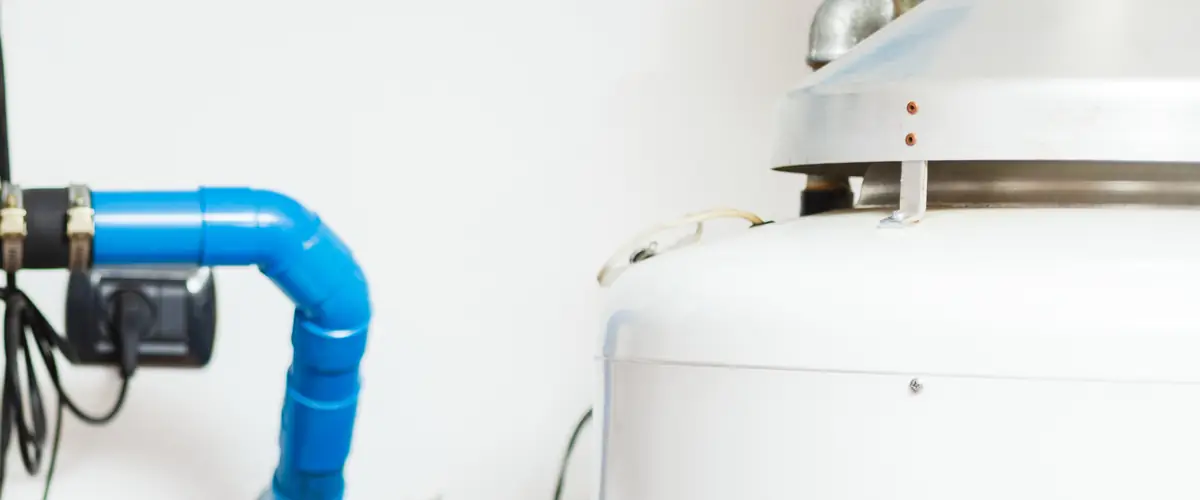
Keeps a tank of water hot around the clock, usually 40 to 50 gallons in a home. Hot water leaves from the top of the tank and cold water refills it from the bottom. Use more than the tank holds and you wait for it to heat back up.
Tankless water heater
Heats water only when you open a hot tap. Cold water flows through a heat exchanger and comes out hot, so there’s no tank to keep warm and nothing to run out. What limits it is how much water it can heat at once.
Both come in gas and electric versions. As a Rinnai-trained dealer, we install and service Rinnai tankless units, and we replace standard tank water heaters too.
How they compare
Here’s how they stack up. The cost, efficiency and lifespan figures come from the U.S. Department of Energy.
- Upfront cost: a tankless water heater costs more to buy and install than a tank.
- Operating cost: tankless typically has lower operating and energy costs, because there’s no tank losing heat while nobody’s using it.
- Efficiency: for homes using 41 gallons of hot water a day or less, tankless can be 24% to 34% more efficient than a tank. For homes using around 86 gallons a day, the edge drops to 8% to 14%.
- Lifespan: tanks last 10 to 15 years. Most tankless units last more than 20.
- Hot water supply: a tank gives you what it holds, then has to recover. Tankless keeps going, up to the flow it’s sized for.
- Space: a tankless unit mounts on the wall instead of taking up floor space.
Sizing it for your water
A tankless water heater is rated by how much it can raise the water temperature at a given flow. The colder the water coming in, the harder it has to work.
The City of Enumclaw says the groundwater it supplies is generally around 50°F, which is also the incoming temperature the Energy Department tells you to plan for. If you want water at about 120°F, that’s a 70-degree rise. The Energy Department’s example puts a typical gas tankless unit at a 70-degree rise at 5 gallons per minute. A 2.5-gallon-per-minute shower and a 0.75-gallon faucet together come to 3.25 gallons per minute, which fits. Add a second shower and you’re at 5.75, past that example unit. The Energy Department also notes that a shower plus the dishwasher can stretch a tankless unit to its limit.
So the right size comes down to how many fixtures your household runs at the same time. We size every system to your household and the water coming into your house. More on that on our tankless water heater page.
What switching to tankless involves
Replacing a tank with another tank is usually the simpler job. Going from a tank to tankless takes more:
- A gas line sized for the burner. Rinnai’s installation manual says the gas supply has to cover the heater’s maximum demand plus every other gas appliance in the house, without losing pressure.
- New venting, since a tankless unit vents differently than a tank.
- A condensate drain for condensing models.
- Remounted water connections, with service valves so maintenance is quick and clean.
Every conversion is priced by the job, not by the hour, with the full scope laid out before we start.
Code items for a new water heater
- Permit: in Enumclaw, installing, relocating or replacing a water heater and its vent is on the City’s plumbing and mechanical permit.
- Expansion tank: Enumclaw requires one on every new tank-type water heater.
- Earthquake straps: Washington’s plumbing code requires water heaters to be anchored or strapped against earthquake movement, with straps in the upper and lower thirds of a tank.
Keeping either one running
A tank needs a little attention too. The Department of Energy suggests flushing a quart of water from the tank every three months, checking the temperature and pressure relief valve every six months, and inspecting the anode rod every three to four years.
A tankless unit needs its heat exchanger flushed to clear mineral scale. Rinnai warns that scale buildup can damage a water heater and reduce its performance, and its residential warranty doesn’t cover problems from improper maintenance, such as scale buildup. How often depends on your water and how much you use, so we’ll recommend a schedule when we install it.
Which one fits your home?
A tank may fit if
You want the lower upfront price, your household’s hot water use is modest, or you’re replacing a tank that’s worked well for you and want a simple swap.
Tankless may fit if
You run back-to-back showers or fill a big tub, plan to stay in the house a long time, want the floor space back, or already have gas service.
Not sure? We’ll look at your setup and give you an upfront price for both options. Call 360-829-7440 or see our water heater repair and replacement service.
Questions We Hear
How long does each type last?
The U.S. Department of Energy puts storage tank water heaters at 10 to 15 years and most tankless water heaters at more than 20 years.
Will a tankless water heater ever run out of hot water?
Not the way a tank does, because it heats water as it flows. But if you run more hot water at once than the unit is sized for, the temperature drops. That’s why sizing matters, especially with cold incoming water.
Do I need a permit to replace a water heater in Enumclaw?
Yes. Installing, relocating or replacing a water heater and its vent is a line item on the City of Enumclaw’s plumbing and mechanical permit, and every new tank-type water heater there needs an expansion tank.
Is tankless worth the higher price?
It depends on how long you’ll stay in the house, how much hot water you use and whether the space matters to you. Tankless costs more to put in, but it typically outlasts a tank and doesn’t lose heat sitting idle. We’ll price both so you can compare.